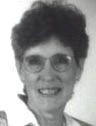
Veterans Day meant a great deal in my childhood. Two of my uncles served in the World Wars. My husband is a veteran, too, so for several years I was a military wife.
I've written about this day at several of my blogs and have included a post of Alicia Sparks:
One Book Two Book: Remembering Our Veterans on Veterans Day.
Alzheimer's Notes:Veterans Day Memories in Alzheimer's World
Quilting and Patchwork: Patriotic Quilts for Veterans Day
Alicia Sparks' Mental Health Notes: Help Veterans Obtain Mental Health Resouces
Do you have associations, past and present, with Veterans Day?
Tuesday, November 11, 2008

Monday, November 10, 2008
Vegan Cookie Recipes Galore
Vegan Cookies for the Planet
The 20 Most Delicious Vegan Cookie Recipes Ever features recipes for the vegan lover who wants to "Eat a Cookie! Save a Planet!"
Developed by vegan Kirsten Nissen, this ebook offers you cookies made from organic ingredients for many occasions and tastes.
Check out what Kirsten has to say (link above) about these recipes and why she developed them.
Do you have vegan cookie and other recipes to share?
Thursday, November 06, 2008
Country Kitchen's Squash Recipes
Recipes
As mentioned, you can prepare squash in a great variety of ways…soup, casseroles, desserts, and breads.
MASHED SQUASH - Simply cooked (boiled or baked), scooped out and mashed, served with butter and a dash of cinnamon, makes an easy to prepare vegetable dish.
SQUASH PIE – Substitute cooked, mashed winter squash for the pumpkin in a recipe. It’s tasty. I usually can’t tell the difference, but some people claim they can.
BAKED ACORN SQUASH with APPLE FILLING - Wash 2 acorn squash, cut into halves lengthwise; scoop out the seeds and fiber. Place in a baking pan with the cut side down. Add ½ inch boiling water. Bake at 400 degrees F. for about 20 minutes.
Using 3 tart apples, peel, core and dice them. Mix with ¼ cup melted butter and ½ cup maple syrup or honey.
Take squash from oven, and turn cut side up. Brush with melted butter. Fill squash with apple mixture. Cover the pan with foil, and then continue baking at 400 degrees F. for 30 minutes, or until the apples and squash are tender.
ACORN SQUASH VARIATION – Many people serve the squash plain. Turn them right side up and sprinkle with cinnamon, possibly a little sugar, and a dab of butter. Finish baking until tender. You also can substitute maple syrup or honey for the sugar.
MORE VARIATIONS - Some cooks make bread stuffing, like that used for turkey, chicken or pork and fill the squash with it instead of apples. You also can add cranberries to the apples (recipe above) or to the bread stuffing. In the South, cooks might use cornbread stuffing.
©2008 Mary Emma Allen
As mentioned, you can prepare squash in a great variety of ways…soup, casseroles, desserts, and breads.
MASHED SQUASH - Simply cooked (boiled or baked), scooped out and mashed, served with butter and a dash of cinnamon, makes an easy to prepare vegetable dish.
SQUASH PIE – Substitute cooked, mashed winter squash for the pumpkin in a recipe. It’s tasty. I usually can’t tell the difference, but some people claim they can.
BAKED ACORN SQUASH with APPLE FILLING - Wash 2 acorn squash, cut into halves lengthwise; scoop out the seeds and fiber. Place in a baking pan with the cut side down. Add ½ inch boiling water. Bake at 400 degrees F. for about 20 minutes.
Using 3 tart apples, peel, core and dice them. Mix with ¼ cup melted butter and ½ cup maple syrup or honey.
Take squash from oven, and turn cut side up. Brush with melted butter. Fill squash with apple mixture. Cover the pan with foil, and then continue baking at 400 degrees F. for 30 minutes, or until the apples and squash are tender.
ACORN SQUASH VARIATION – Many people serve the squash plain. Turn them right side up and sprinkle with cinnamon, possibly a little sugar, and a dab of butter. Finish baking until tender. You also can substitute maple syrup or honey for the sugar.
MORE VARIATIONS - Some cooks make bread stuffing, like that used for turkey, chicken or pork and fill the squash with it instead of apples. You also can add cranberries to the apples (recipe above) or to the bread stuffing. In the South, cooks might use cornbread stuffing.
©2008 Mary Emma Allen
Squash - A Bounty of Fall
Wonders of Squash
Winter squash, in its many shapes and varieties, makes a hit in the fall. This hard tough covered vegetable will save into the winter when stored in a dark, dry place.
Generally, in our homes today, the storage consists of a basement or pantry. Years ago, a root cellar held stored food – winter vegetables, squash, cabbage, etc. This was a dug out portion of ground, often containing a framed door, possibly framing inside – a sort of cave.
Storage in the root cellar kept fruit and vegetables from freezing and provided food throughout the winter. If the house had a cellar and it was cold enough, food often was stored there.
Squash Appeal
Squash appealed in days ago because it kept well through the winter (if stored properly) and could be prepared in a variety of ways, thus adding variation to the menu, in days when there weren’t so many different foods as today.
This vegetable comes in many types. Among them are: Hubbard, acorn (the traditional dark green), white acorn, gold acorn, table ace, butternut, bush, sugar loaf, buttercup, sugar, and turban.
Decorative Ideas for Squash
In addition to providing food for fall and winter, squash with hard shells provide decorative accents, both indoors and out.
*Place near your doorway, around a display of dried corn stalks, perhaps with pumpkins and gourds, too.
*Arrange squash and winter vegetables in a bowl on a sideboard, dining or kitchen table.
*Simply arrayed throughout the house wherever a colorful accent is needed, they look nice.
*Also displayed in a crock or basket in a front hallway they add color..
*Place in gift baskets with other fall fruit and vegetables.
(c)2008 Mary Emma Allen
Winter squash, in its many shapes and varieties, makes a hit in the fall. This hard tough covered vegetable will save into the winter when stored in a dark, dry place.
Generally, in our homes today, the storage consists of a basement or pantry. Years ago, a root cellar held stored food – winter vegetables, squash, cabbage, etc. This was a dug out portion of ground, often containing a framed door, possibly framing inside – a sort of cave.
Storage in the root cellar kept fruit and vegetables from freezing and provided food throughout the winter. If the house had a cellar and it was cold enough, food often was stored there.
Squash Appeal
Squash appealed in days ago because it kept well through the winter (if stored properly) and could be prepared in a variety of ways, thus adding variation to the menu, in days when there weren’t so many different foods as today.
This vegetable comes in many types. Among them are: Hubbard, acorn (the traditional dark green), white acorn, gold acorn, table ace, butternut, bush, sugar loaf, buttercup, sugar, and turban.
Decorative Ideas for Squash
In addition to providing food for fall and winter, squash with hard shells provide decorative accents, both indoors and out.
*Place near your doorway, around a display of dried corn stalks, perhaps with pumpkins and gourds, too.
*Arrange squash and winter vegetables in a bowl on a sideboard, dining or kitchen table.
*Simply arrayed throughout the house wherever a colorful accent is needed, they look nice.
*Also displayed in a crock or basket in a front hallway they add color..
*Place in gift baskets with other fall fruit and vegetables.
(c)2008 Mary Emma Allen
Monday, September 29, 2008
Pumpkin Pies & More
Pumpkin pie has been associated with autumn menus since the 17th century. It's believed the the early settlers made the first pies by scooping out the seeds from the center of the pumpkin and then filling it with milk, seasonings, maple syrup or molasses. Then they baked the pumpkin until tender.
Poet John Greenleaf Whittier wrote about pumpkin pies. Mention of pumpkin pie, pudding, and other dishes is found in other writings and diaries.
Many Varieties of Pumpkin Pie
Pumpkin pies come in many varieties today. Some cooks like to use the fresh pumpkins, cutting them up, cooking and mashing them for a pie filling. Others use canned pumpkin. When I was a child, we generally used the pumpkins we grew in garden and field.
You also can mix pumpkin with other ingredients for pie variations.
Poet John Greenleaf Whittier wrote about pumpkin pies. Mention of pumpkin pie, pudding, and other dishes is found in other writings and diaries.
Many Varieties of Pumpkin Pie
Pumpkin pies come in many varieties today. Some cooks like to use the fresh pumpkins, cutting them up, cooking and mashing them for a pie filling. Others use canned pumpkin. When I was a child, we generally used the pumpkins we grew in garden and field.
You also can mix pumpkin with other ingredients for pie variations.
- This includes stirring a package of mincemeat into your pie recipe.
- Or you can create a chiffon pumpkin pie by making a gelatin custard mixture and stirring cooked pumpkin into it. Then turn into baked pie shell and top with whipped cream or whipped topping.
- Add vanilla ice cream to the pumpkin pie.
FROZEN PUMPKIN PIE is one variation.
Stir 1 pint vanilla ice cream to soften. Spread in a baked 9-inch pie shell. Freeze ice cream in shell until firm.
Mix together 1 cup canned or fresh cooked pumpkin, 3/4 cup sugar (1/2 cup if you don't want it so sweet), 1/2 teaspoon salt, 1 teaspoon ginger, 1/4 teaspoon cinnamon, 1/8 teaspoon nutmeg. (Spice amounts may vary depending on individual taste.) Fold in 1 1/2 cups miniature marshmallows and 1 cup heavy cream, whipped (or use whipped topping).
Spoon onto ice cream layer. Sprinkle with chopped nuts, if desired. Freeze until firm.
When serving, take from freezer and let stand in the refrigerator for 10 to 15 minutes. Top with more whipped topping, if desired.
(c)2008 Mary Emma Allen
Pumpkin Time of Year
These orange globes of autumn dot the fields and garden. They're stacked in piles around farm stands. They cover fields. My husband and I drove by a church yard colored orange by the multitudes of pumpkins for a fund raising sale.
My nieces used to raise and sell pumpkins at a stand in front of their home. The contrasts between the orange of pumpkins, dried cornstalks, and colorful leaves on the trees present a perfect country autumn picture.
Children carve or paint laughing and scary faces on pumpkins to display for Halloween. That was a high point of my childhood and for my daughter and grandchildren, too.
It's also time for pumpkin recipes. What are some of your favorites?
(c)2008 Mary Emma Allen
My nieces used to raise and sell pumpkins at a stand in front of their home. The contrasts between the orange of pumpkins, dried cornstalks, and colorful leaves on the trees present a perfect country autumn picture.
Children carve or paint laughing and scary faces on pumpkins to display for Halloween. That was a high point of my childhood and for my daughter and grandchildren, too.
It's also time for pumpkin recipes. What are some of your favorites?
(c)2008 Mary Emma Allen
Friday, September 19, 2008
Traveling, Meeting Authors & Finding New Food Ideas
My love of traveling translates into discovering new places (or revisiting old ones), meeting new people (or seeing friends again), learning about new foods and collecting recipes. On a recent trip to Wisconsin and the Upper Peninsula of Michigan, I experienced all of these.
I met in person for the first time, two authors I’d been corresponding with via an Internet group and e-mail. Janet Elaine Smith and Billie Williams live side-by-side on a street they call Authors’ Row, in a small town in northeastern Wisconsin. Their homes were right on Jim’s and my route to Iron Mountain, Michigan, on the Wisconsin/Michigan border.
Inspiration for Novel
Having tea with Janet and Billie and chatting with them, inspired me to get going again on my Civil War era novel for youngsters, Papa Goes to War (http://www.mandycivilwardaughter.blogspot.com/ ). Janet has written one for youngsters, My Dear Phebe, based on letters from this period connected with her family.
My novel, still in draft form, centers around ancestors (my grandmother’s uncles) who fought in this war. In researching more about them and their lives, I discovered the Mandy of my novel, whose mother had died. Her father felt he needed to fight for the Union. So his new wife took care of the children. In my story, Mandy experiences the turmoil of a father away, a new stepmother, and a world (the world she knew) at war.
Foods of the Area
As I began thinking again of getting back to work on this novel, we traveled further north to Iron Mountain, where we had business meetings. However, while there, friends introduced us to new recipes.
Food in this area is influenced by the Scandinavians who settled here to work in the lumber camps. Lumbering still is a big part of the economy of the region.
Baking on the Grill
Since our friends’ oven wasn’t working, they were doing much of their baking on the grill. I was amazed at how much can be cooked this way.
She purchased pizza that needed baking. It turned out delicious on the grill. Her son made chocolate chip oatmeal cookie bars and baked them on the grill, too. Another tasty treat.
Potatoes in Foil – Combine thinly sliced potatoes, cut-up green beans fresh from the garden, and diced onion. Sprinkle with salt and pepper and dot with butter. You can add sliced or julienne carrots. Wrap mixture in foil and cook over the grill until done. (This dish also could be baked in an oven, preferably in a dish but covered with foil.)
KRUPSUA, a recipe with Norwegian origins, is a family favorite they wanted to make for us for supper. Wisk briskly together in a medium bowl – 3 eggs, 2 cups milk, 1 cup flour, ½ cup sugar. Slice ½ stick butter into cast iron skillet . (Our friend used an 8-9-inch one. You also can use a round cake pan.)
Put pan in oven preheated to 400 degrees F. (She used her toaster oven.) Remove pan when butter is melted. Pour the krupsua batter into it. Put back into oven and bake 20 minutes until set in the middle. (It will rise something like a soufflé.)
Slice into wedges and serve warm or cold. We enjoyed it with mashed strawberries and whipped topping, although you can eat it without. Delicious!
©2008 Mary Emma Allen
(Mary Emma Allen enjoys traveling, collecting new recipes, and meeting with friends. Visit her new travel blog, http://greenvagabondtraveler.blogspot.com .)
I met in person for the first time, two authors I’d been corresponding with via an Internet group and e-mail. Janet Elaine Smith and Billie Williams live side-by-side on a street they call Authors’ Row, in a small town in northeastern Wisconsin. Their homes were right on Jim’s and my route to Iron Mountain, Michigan, on the Wisconsin/Michigan border.
Inspiration for Novel
Having tea with Janet and Billie and chatting with them, inspired me to get going again on my Civil War era novel for youngsters, Papa Goes to War (http://www.mandycivilwardaughter.blogspot.com/ ). Janet has written one for youngsters, My Dear Phebe, based on letters from this period connected with her family.
My novel, still in draft form, centers around ancestors (my grandmother’s uncles) who fought in this war. In researching more about them and their lives, I discovered the Mandy of my novel, whose mother had died. Her father felt he needed to fight for the Union. So his new wife took care of the children. In my story, Mandy experiences the turmoil of a father away, a new stepmother, and a world (the world she knew) at war.
Foods of the Area
As I began thinking again of getting back to work on this novel, we traveled further north to Iron Mountain, where we had business meetings. However, while there, friends introduced us to new recipes.
Food in this area is influenced by the Scandinavians who settled here to work in the lumber camps. Lumbering still is a big part of the economy of the region.
Baking on the Grill
Since our friends’ oven wasn’t working, they were doing much of their baking on the grill. I was amazed at how much can be cooked this way.
She purchased pizza that needed baking. It turned out delicious on the grill. Her son made chocolate chip oatmeal cookie bars and baked them on the grill, too. Another tasty treat.
Potatoes in Foil – Combine thinly sliced potatoes, cut-up green beans fresh from the garden, and diced onion. Sprinkle with salt and pepper and dot with butter. You can add sliced or julienne carrots. Wrap mixture in foil and cook over the grill until done. (This dish also could be baked in an oven, preferably in a dish but covered with foil.)
KRUPSUA, a recipe with Norwegian origins, is a family favorite they wanted to make for us for supper. Wisk briskly together in a medium bowl – 3 eggs, 2 cups milk, 1 cup flour, ½ cup sugar. Slice ½ stick butter into cast iron skillet . (Our friend used an 8-9-inch one. You also can use a round cake pan.)
Put pan in oven preheated to 400 degrees F. (She used her toaster oven.) Remove pan when butter is melted. Pour the krupsua batter into it. Put back into oven and bake 20 minutes until set in the middle. (It will rise something like a soufflé.)
Slice into wedges and serve warm or cold. We enjoyed it with mashed strawberries and whipped topping, although you can eat it without. Delicious!
©2008 Mary Emma Allen
(Mary Emma Allen enjoys traveling, collecting new recipes, and meeting with friends. Visit her new travel blog, http://greenvagabondtraveler.blogspot.com .)
Wednesday, September 10, 2008
Glove Boxes & Tea Parties
MaryEmma'sCountryKitchen
“Those were glove boxes,” the gentleman remarked when I showed him two wooden boxes (about 5 x9x2-inches) connected by a 24-inch piece of wood.
They had set on the dresser in the guest room of the farmhouse where I grew up. I’d always thought they had been used for storing jewelry and handkerchiefs.
Apparently ladies stored their several pairs of gloves in these boxes. Probably the ladies also placed hankies here, too, as my aunt did when she visited and used the guest room.
Why Mention Glove Boxes?
Why am I writing about gloves boxes in Country Kitchen? This reminded me of Victorian tea parties when ladies and young girls wore gloves and hats if they visited someone’s home. When I was a girl, we weren’t considered well-dressed for church and formal occasions unless we wore gloves and hats.
No, I’m not of the Victorian tea party era, but I grew up with a tea tradition in my family. It was a sign of hospitality to offer a cup of tea. Even after Mother lived in the nursing home with Alzheimer’s, she enjoyed the tea parties when my grandchildren (her great grands) and I visited her.
So…when the gentleman, who was looking at some of my other old furniture, noticed the glove boxes and told me about their use, I was reminded of tea parties and tea time traditions.
Tea Parties Popular Topic
I’ve also discovered that tea and tea parties and accompanying recipes are popular topics here at Country Kitchen. One lady remarked that reading my column was like sitting down and chatting with me over a cup of tea. I hope I make you feel welcome and that you enjoy our weekly “chats” on the many and diverse topics I discover to share with you.
Tea party foods are varied. There are traditional English teas. Then Americanized versions. My grandmother and aunt might have freshly baked bread with churned butter and homemade jelly. Auntie usually had cookies, too.
At the nursing home, Mother enjoyed muffins we picked up at a fast food restaurant. The grandchildren liked them or cookies we might bring with us.
CRAZY QUILT BREAD might be a fun recipe to try for serving with tea. Mix together ½ cup sugar, 1 egg, 1 ¼ cups milk, 3 cups biscuit mix; beat quickly for 30 seconds. Batter should be somewhat lumpy.
Stir in ½ cup mixed candied fruit and ½ cup chopped nuts. Pour into a greased and floured 9 x 5 x 3-inch loaf pan. Bake at 350 degrees F. for 45-50 minutes or until inserted toothpick comes out clean. There probably will be a crack on the top. Cool before slicing.
(Variation; You may want to bake it in a 9-inch square pan at same temperature but for less time.)
©2008 Mary Emma Allen
Mary Emma Allen researches and writes from her NH home or during her travels. Visit her latest blog The “Green” Vagabond Traveler (http://greenvagabondtraveler.blogspot.com).
“Those were glove boxes,” the gentleman remarked when I showed him two wooden boxes (about 5 x9x2-inches) connected by a 24-inch piece of wood.
They had set on the dresser in the guest room of the farmhouse where I grew up. I’d always thought they had been used for storing jewelry and handkerchiefs.
Apparently ladies stored their several pairs of gloves in these boxes. Probably the ladies also placed hankies here, too, as my aunt did when she visited and used the guest room.
Why Mention Glove Boxes?
Why am I writing about gloves boxes in Country Kitchen? This reminded me of Victorian tea parties when ladies and young girls wore gloves and hats if they visited someone’s home. When I was a girl, we weren’t considered well-dressed for church and formal occasions unless we wore gloves and hats.
No, I’m not of the Victorian tea party era, but I grew up with a tea tradition in my family. It was a sign of hospitality to offer a cup of tea. Even after Mother lived in the nursing home with Alzheimer’s, she enjoyed the tea parties when my grandchildren (her great grands) and I visited her.
So…when the gentleman, who was looking at some of my other old furniture, noticed the glove boxes and told me about their use, I was reminded of tea parties and tea time traditions.
Tea Parties Popular Topic
I’ve also discovered that tea and tea parties and accompanying recipes are popular topics here at Country Kitchen. One lady remarked that reading my column was like sitting down and chatting with me over a cup of tea. I hope I make you feel welcome and that you enjoy our weekly “chats” on the many and diverse topics I discover to share with you.
Tea party foods are varied. There are traditional English teas. Then Americanized versions. My grandmother and aunt might have freshly baked bread with churned butter and homemade jelly. Auntie usually had cookies, too.
At the nursing home, Mother enjoyed muffins we picked up at a fast food restaurant. The grandchildren liked them or cookies we might bring with us.
CRAZY QUILT BREAD might be a fun recipe to try for serving with tea. Mix together ½ cup sugar, 1 egg, 1 ¼ cups milk, 3 cups biscuit mix; beat quickly for 30 seconds. Batter should be somewhat lumpy.
Stir in ½ cup mixed candied fruit and ½ cup chopped nuts. Pour into a greased and floured 9 x 5 x 3-inch loaf pan. Bake at 350 degrees F. for 45-50 minutes or until inserted toothpick comes out clean. There probably will be a crack on the top. Cool before slicing.
(Variation; You may want to bake it in a 9-inch square pan at same temperature but for less time.)
©2008 Mary Emma Allen
Mary Emma Allen researches and writes from her NH home or during her travels. Visit her latest blog The “Green” Vagabond Traveler (http://greenvagabondtraveler.blogspot.com).
Tuesday, August 19, 2008
VICTORY GARDEN QUILTS
As I glanced through a quilting magazine, I saw an introduction to the book, Victory Garden Quilts, by Eleanor Burns. This term brought back memories.
Even the fabrics were reminiscent of those we used in making clothing and other items in that era. These were fabrics like those used when I learned to sew, my grandmother pieced quilts by hand, and Auntie sewed aprons and hand towels.
Also, the term "victory garden" took me back to childhood during World War II, when these gardens were popular and patriotic. (See my post Victory Gardens Popular Once Again.)
(c)2008 Mary Emma Allen
Even the fabrics were reminiscent of those we used in making clothing and other items in that era. These were fabrics like those used when I learned to sew, my grandmother pieced quilts by hand, and Auntie sewed aprons and hand towels.
Also, the term "victory garden" took me back to childhood during World War II, when these gardens were popular and patriotic. (See my post Victory Gardens Popular Once Again.)
(c)2008 Mary Emma Allen
VICTORY GARDENS POPULAR ONCE AGAIN
MaryEmmasCountryKitchen.com
In the days of my childhood, during World War II, Victory Gardens were the height of popularity and patriotism. Now Americans’ thinking has come full circle, and I see and hear the term “victory garden” frequently.
Victory gardens, where Americans raised their own fruit and vegetables, often the first time for many, were popular during those war years. Some also planted flowers for cheer in an uncertain world of black-outs and food shortages and rationing.
Our Victory Garden
Although I grew up on a farm where we had a garden anyway, my mom planted one with flowers she called our Victory garden. She painted a large tub red and blue with large white V’s on either side. This, filled with geraniums, she positioned in the center of the plot.
You found Victory Gardens in city and country. They were planted in any space one could utilize, if you didn’t have a traditional garden plot. You might see vegetables in window boxes, front yard, back yard, or side yard.
Victory Gardens Today
Today, with gas and food, not rationed, but definitely at higher prices, more people have been thinking about raising and preserving their own food this summer. The term of 65 years ago came to someone’s mind, so they’re referred to as Victory Gardens again, as people, who have never done so or rarely, begin planting gardens.
Some of these may be no more than herbs, tomato plants and pepper plants in window boxes or tubs. Others may spade up a small plot in their yard. Others might be community garden, whereby residents pay a small fee for a plot to plant in larger acreage.
Do you have Victory Garden memories? .
World War II Foods
The recipes of the war years often had to be altered to reflect the scarsity of butter, eggs, milk and other items. That’s when margarine or oleo came into use (the type we had to mix with yellow coloring so it didn’t look like lard).
ONE EGG CAKE – Although we had plenty of eggs on our farm (we raised chickens and sold eggs as well as the milk from dairy cows), many people didn’t. So recipes using fewer eggs or no eggs were devised. Also, less sugar and shortening often were called for.
Cream 2/3 cup sugar and ¼ cup shortening; add 1 egg and mix well. Sift dry ingredients (1 ½ cups flour,1/4 teaspoon salt, 2 teaspoons baking powder). Add these to shortening mixture alternately with ½ cup milk and ½ teaspoon vanilla added. Beat well.
Bake in 8-inch square or round pan at 350 degrees F. for 25 to 30 minutes until tests done. Frost with desired icing.
©2008 Mary Emma Allen
(Mary Emma Allen writes memories, cooking columns, and stories from her NH home. She also teaches memory writing workshops. Visit www.onebooktwobook.com or www.quiltingandpatchwork.com )
In the days of my childhood, during World War II, Victory Gardens were the height of popularity and patriotism. Now Americans’ thinking has come full circle, and I see and hear the term “victory garden” frequently.
Victory gardens, where Americans raised their own fruit and vegetables, often the first time for many, were popular during those war years. Some also planted flowers for cheer in an uncertain world of black-outs and food shortages and rationing.
Our Victory Garden
Although I grew up on a farm where we had a garden anyway, my mom planted one with flowers she called our Victory garden. She painted a large tub red and blue with large white V’s on either side. This, filled with geraniums, she positioned in the center of the plot.
You found Victory Gardens in city and country. They were planted in any space one could utilize, if you didn’t have a traditional garden plot. You might see vegetables in window boxes, front yard, back yard, or side yard.
Victory Gardens Today
Today, with gas and food, not rationed, but definitely at higher prices, more people have been thinking about raising and preserving their own food this summer. The term of 65 years ago came to someone’s mind, so they’re referred to as Victory Gardens again, as people, who have never done so or rarely, begin planting gardens.
Some of these may be no more than herbs, tomato plants and pepper plants in window boxes or tubs. Others may spade up a small plot in their yard. Others might be community garden, whereby residents pay a small fee for a plot to plant in larger acreage.
Do you have Victory Garden memories? .
World War II Foods
The recipes of the war years often had to be altered to reflect the scarsity of butter, eggs, milk and other items. That’s when margarine or oleo came into use (the type we had to mix with yellow coloring so it didn’t look like lard).
ONE EGG CAKE – Although we had plenty of eggs on our farm (we raised chickens and sold eggs as well as the milk from dairy cows), many people didn’t. So recipes using fewer eggs or no eggs were devised. Also, less sugar and shortening often were called for.
Cream 2/3 cup sugar and ¼ cup shortening; add 1 egg and mix well. Sift dry ingredients (1 ½ cups flour,1/4 teaspoon salt, 2 teaspoons baking powder). Add these to shortening mixture alternately with ½ cup milk and ½ teaspoon vanilla added. Beat well.
Bake in 8-inch square or round pan at 350 degrees F. for 25 to 30 minutes until tests done. Frost with desired icing.
©2008 Mary Emma Allen
(Mary Emma Allen writes memories, cooking columns, and stories from her NH home. She also teaches memory writing workshops. Visit www.onebooktwobook.com or www.quiltingandpatchwork.com )
Wednesday, July 30, 2008
The Cook's Secrets Revealed
I blew up the eggs and the odor lingered throughout the house all day no matter how much deodorizer I sprayed. I couldn’t hide this cooking error! My family calls this the trials of living with a writer.
I put six eggs on to boil and sat down at the computer to write. I forgot to set the timer, so the next I was aware…the odor of sulphur enveloped the kitchen and wafted toward the office where I was working.
So…don’t think I’m the perfect cook. My family will tell you otherwise. When I’m busy with a writing project, my husband knows he may need to cook our meal if he wants it to perfection.
(Does he think I do this on purpose so he will cook the meals? Incidentally he’s a great chef.)
Another Cooking Secret
Let your children cook when they express a desire to mess with ingredients in a mixing bowl. It’s worth the patience to have them “help” when they’re young. They may do much of the cooking for you when they’re older.
I was a news reporter when my daughter was a teen, so my schedule often was erratic as I covered stories throughout the area. Beth often called me after school and discussed the supper menu. It was great to come home and find the meal ready. Since then she has become a very good cook.
What fun when a family cooks together and shares the meal preparation tasks. Each may develop their specialty and add it to the menu.
Desire for Simpler Meals
I find, as I grow older, I have less desire to cook complicated and time consuming recipes. Perhaps it’s because I like eating simpler foods. Do our tastes change from one stage of life to another.
I think back to some of the foods we prepared on the farm when I was growing up. And I recall how my mother-in-law talked more about the foods of her youth as she advanced in years.
This, too, is a way we can carry on the family food heritage by preparing some of these for our family and copying them down in cookbooks.
PRETZEL SALAD is a dish Beth makes that I enjoy. Although it’s called a salad, you actually can use it as a dessert. You make it in layers.
1st layer – Mix together 2 cups crushed unsalted pretzels, 4 tablespoons , ¾ cup melted butter or margarine. Spread in a 9 x 13-inch pan at 400 degrees F. for 6 minutes. Cool.
2nd layer – Mix together 8 oz. cream cheese, ½ cup sugar, and 8 oz. whipped topping. Spread over cooled crust. (You can use lower fat cream cheese and lite whipped topping, and you can cut back the sugar somewhat if you’d like it less sweet.)
3rd layer – Dissolve 6 oz. package strawberry gelatin in 2 cups boiling water. Stir in 10-oz. package frozen strawberries. Chill until almost congealed. Spread on top of cheese mixture. Continue chilling until set. Cut into squares.
This Pretzel Crust makes a nice base for other desserts or jelled salads.
©2008 Mary Emma Allen
(I write from my multigenerational home in NH. Visit my other blogs at http://www.quiltingandpatchwork.com/ , http://www.alzheimersnotes.com/ , http://www.homebiznotes.com/, http://www.onebooktwobook.com/, http://)
I put six eggs on to boil and sat down at the computer to write. I forgot to set the timer, so the next I was aware…the odor of sulphur enveloped the kitchen and wafted toward the office where I was working.
So…don’t think I’m the perfect cook. My family will tell you otherwise. When I’m busy with a writing project, my husband knows he may need to cook our meal if he wants it to perfection.
(Does he think I do this on purpose so he will cook the meals? Incidentally he’s a great chef.)
Another Cooking Secret
Let your children cook when they express a desire to mess with ingredients in a mixing bowl. It’s worth the patience to have them “help” when they’re young. They may do much of the cooking for you when they’re older.
I was a news reporter when my daughter was a teen, so my schedule often was erratic as I covered stories throughout the area. Beth often called me after school and discussed the supper menu. It was great to come home and find the meal ready. Since then she has become a very good cook.
What fun when a family cooks together and shares the meal preparation tasks. Each may develop their specialty and add it to the menu.
Desire for Simpler Meals
I find, as I grow older, I have less desire to cook complicated and time consuming recipes. Perhaps it’s because I like eating simpler foods. Do our tastes change from one stage of life to another.
I think back to some of the foods we prepared on the farm when I was growing up. And I recall how my mother-in-law talked more about the foods of her youth as she advanced in years.
This, too, is a way we can carry on the family food heritage by preparing some of these for our family and copying them down in cookbooks.
PRETZEL SALAD is a dish Beth makes that I enjoy. Although it’s called a salad, you actually can use it as a dessert. You make it in layers.
1st layer – Mix together 2 cups crushed unsalted pretzels, 4 tablespoons , ¾ cup melted butter or margarine. Spread in a 9 x 13-inch pan at 400 degrees F. for 6 minutes. Cool.
2nd layer – Mix together 8 oz. cream cheese, ½ cup sugar, and 8 oz. whipped topping. Spread over cooled crust. (You can use lower fat cream cheese and lite whipped topping, and you can cut back the sugar somewhat if you’d like it less sweet.)
3rd layer – Dissolve 6 oz. package strawberry gelatin in 2 cups boiling water. Stir in 10-oz. package frozen strawberries. Chill until almost congealed. Spread on top of cheese mixture. Continue chilling until set. Cut into squares.
This Pretzel Crust makes a nice base for other desserts or jelled salads.
©2008 Mary Emma Allen
(I write from my multigenerational home in NH. Visit my other blogs at http://www.quiltingandpatchwork.com/ , http://www.alzheimersnotes.com/ , http://www.homebiznotes.com/, http://www.onebooktwobook.com/, http://)
Monday, May 19, 2008
The Food Bloggers Offer Favorite Food Ideas & Recipes
The Food Bloggers compile some of their favorite posts into weekly offerings. This week, I'm sharing the ideas with readers here at Country Kitchen.
At Busy Family Meals Cyndi is polling your summertime eating preferences...come vote, and let your voice be heard!
HG, You Go Girl! Jean reviews Hungry Girl's new recipe book. It blasted onto the NY Times Best Sellers List as #2!
Healthy Eating - Sometimes Challenging for the Home Business Owner Mary Emma Allen, at Home Biz Notes, shares ideas on how the time pressed home business owner , or anyone, can eat better.
Publish Your Own Cookbook Eileen tells you how easy it is to publish your own cookbook of family or club recipes. Start gathering up everyone's favorites now!
Enjoy! Share with us some of your favorite recipes.
(c)2008 Mary Emma Allen
At Busy Family Meals Cyndi is polling your summertime eating preferences...come vote, and let your voice be heard!
HG, You Go Girl! Jean reviews Hungry Girl's new recipe book. It blasted onto the NY Times Best Sellers List as #2!
Healthy Eating - Sometimes Challenging for the Home Business Owner Mary Emma Allen, at Home Biz Notes, shares ideas on how the time pressed home business owner , or anyone, can eat better.
Publish Your Own Cookbook Eileen tells you how easy it is to publish your own cookbook of family or club recipes. Start gathering up everyone's favorites now!
Enjoy! Share with us some of your favorite recipes.
(c)2008 Mary Emma Allen
Saturday, June 10, 2006
Check Out Tea Time Blog
I've created a new blog, Tea Time News & Notes at http://tea-time-notes.blogspot.com, with information solely about this interesting and enjoyable tradition. Of all my "Country Kitchen" newspaper columns over the years, those about tea, tea time, tea traditions, and tea implements seem to be most popular.
So I'll be devoting this Tea Time blog to this topic. If you have traditions of your own you'd like to share, e-mail me: me.allen@juno.com .
So I'll be devoting this Tea Time blog to this topic. If you have traditions of your own you'd like to share, e-mail me: me.allen@juno.com .
Friday, February 24, 2006
Food Ideas from Novels
Numerous mystery novels focusing on foods, catering, and restaurants often include recipes. Sometimes these authors even go on to collect them into a recipe book.
However, even when a novel’s primary character isn’t involved in the food industry, you may find the author has woven the foods of an area or era into the story. These contribute to the description and events to create realism. They help to move the story forward or give better expression of the characters.
Whatever the purpose, the food references provide delectable reading for anyone with an interest in culinary topics or who writes a column as I do.
Food Typical of Charleston
I discovered in Patricia Sprinkle’s mystery, Murder in the Charleston Manner, the weaving in of food and its preparation as background gave more of the Southern aura to the story. If the author had wanted, she could have included recipes for these typically Charleston, SC foods in an appendix
Perhaps others don’t pick up on the food and recipe aspect when reading a novel as much as I do. Because I’ve been writing “Country Kitchen” and other food articles for nearly 45 years, my mind seems attuned to these topics in books I read.
In Chapter One, the characters are arriving for dinner. You get the idea this is a ritual. In the next chapter, Sheila, the main character, enjoys tea and chocolate chip cookies with her aunt. Sheila doesn’t like her tea sweetened. (In the South, when you ask for iced tea, unless you specify otherwise, you’ll likely be served a glass of strongly sweetened tea, called Sweet Tea. It’s even mentioned by this name on many restaurant menus.)
Food Midst Mystery
Sheila leaves her aunt’s home in Atlanta to investigate mysterious happenings at the home of her aunt’s childhood friends in Charleston. Much of the character introduction and interaction takes place at the dinner table that evening.
The author describes the hostess’s son-in-law carving the ham to a “delicate thinness.” Sheila takes a serving of green beans “simmered for hours with bits of pork”, so common in Southern cooking.
After dinner, they move to the living room for coffee and more conversation. Then Nell, the housekeeper, appears with a tray of strawberry shortcakes. One of the ladies, Francine, makes a pot of herbal tea. (Her desire for herbal tea eventually plays a role in the murder.)
Various Foods Served
Next day, a leisurely lunch on the upstairs porch consists of chicken salad, fresh strawberries, rolls, and sweet tea. Nell provids unsweetened tea for Sheila. They dip the strawberries in powdered sugar.
Potato puffs and broiled shrimp is another dinner menu. For breakfast one morning Nell serves eggs, bacon, grits, and hot biscuits, along with coffee, and herbal tea.
When Sheila dines at Buddy’s restaurant, she has the house specialty…roast oysters
These are only a few of the foods mentioned throughout the novel. This doesn’t detract from the story; instead it lends authenticity to the setting and characters.
Leftover Pie Dough Treat
Sheila often spends time with Nell in the kitchen as she obtains information and discusses family incidents and history. One of the interesting dishes, described more in detail, that Sheila observes Nell making is created from pie dough, left from a pie covered by crisscrossing paper-thin strips of dough.
Nell rolls the leftover dough flat. Then she sprinkles it with sugar and dots with butter before rolling into a long roll. This she cuts into “pinwheels” and puts in a baking dish. Nell next pours milk over the sweetened dough and sets it in the oven beside the pie to bake.
We don’t learn the exact amounts of ingredients (as typical of many old recipes), but could easily recreate the interesting recipe if one wanted to make it. I’d want to add a bit of cinnamon to the sugar.
©2006
(Mary Emma Allen researches and writes about food and recipes from her multigenerational home and during her travels. Visit her web site: www.maryemmallen.blogspot.com; e-mail: me.allen@juno.com )
However, even when a novel’s primary character isn’t involved in the food industry, you may find the author has woven the foods of an area or era into the story. These contribute to the description and events to create realism. They help to move the story forward or give better expression of the characters.
Whatever the purpose, the food references provide delectable reading for anyone with an interest in culinary topics or who writes a column as I do.
Food Typical of Charleston
I discovered in Patricia Sprinkle’s mystery, Murder in the Charleston Manner, the weaving in of food and its preparation as background gave more of the Southern aura to the story. If the author had wanted, she could have included recipes for these typically Charleston, SC foods in an appendix
Perhaps others don’t pick up on the food and recipe aspect when reading a novel as much as I do. Because I’ve been writing “Country Kitchen” and other food articles for nearly 45 years, my mind seems attuned to these topics in books I read.
In Chapter One, the characters are arriving for dinner. You get the idea this is a ritual. In the next chapter, Sheila, the main character, enjoys tea and chocolate chip cookies with her aunt. Sheila doesn’t like her tea sweetened. (In the South, when you ask for iced tea, unless you specify otherwise, you’ll likely be served a glass of strongly sweetened tea, called Sweet Tea. It’s even mentioned by this name on many restaurant menus.)
Food Midst Mystery
Sheila leaves her aunt’s home in Atlanta to investigate mysterious happenings at the home of her aunt’s childhood friends in Charleston. Much of the character introduction and interaction takes place at the dinner table that evening.
The author describes the hostess’s son-in-law carving the ham to a “delicate thinness.” Sheila takes a serving of green beans “simmered for hours with bits of pork”, so common in Southern cooking.
After dinner, they move to the living room for coffee and more conversation. Then Nell, the housekeeper, appears with a tray of strawberry shortcakes. One of the ladies, Francine, makes a pot of herbal tea. (Her desire for herbal tea eventually plays a role in the murder.)
Various Foods Served
Next day, a leisurely lunch on the upstairs porch consists of chicken salad, fresh strawberries, rolls, and sweet tea. Nell provids unsweetened tea for Sheila. They dip the strawberries in powdered sugar.
Potato puffs and broiled shrimp is another dinner menu. For breakfast one morning Nell serves eggs, bacon, grits, and hot biscuits, along with coffee, and herbal tea.
When Sheila dines at Buddy’s restaurant, she has the house specialty…roast oysters
These are only a few of the foods mentioned throughout the novel. This doesn’t detract from the story; instead it lends authenticity to the setting and characters.
Leftover Pie Dough Treat
Sheila often spends time with Nell in the kitchen as she obtains information and discusses family incidents and history. One of the interesting dishes, described more in detail, that Sheila observes Nell making is created from pie dough, left from a pie covered by crisscrossing paper-thin strips of dough.
Nell rolls the leftover dough flat. Then she sprinkles it with sugar and dots with butter before rolling into a long roll. This she cuts into “pinwheels” and puts in a baking dish. Nell next pours milk over the sweetened dough and sets it in the oven beside the pie to bake.
We don’t learn the exact amounts of ingredients (as typical of many old recipes), but could easily recreate the interesting recipe if one wanted to make it. I’d want to add a bit of cinnamon to the sugar.
©2006
(Mary Emma Allen researches and writes about food and recipes from her multigenerational home and during her travels. Visit her web site: www.maryemmallen.blogspot.com; e-mail: me.allen@juno.com )
Monday, January 09, 2006
Create a Youngster's Heritage Recipe Book
“Why don’t you write down our favorite recipes in a book for me?” our granddaughter asked her mom.
So creating a heritage recipe book for a Christmas gift resulted. The family favorites have been written down, with space for the young cook to add more. I’ll go through some of those that date back to her great, great grandmother and see if she wants to add those, along with the stories behind them.
Favorite recipes can tell one aspect of a family’s story. When were they served? Who traditionally prepared them? Were they handed down through the generations or a new recipe you discovered and recently began serving?
Various Methods of Compiling Recipes
You’ll find various methods of compiling these recipes. Try something mentioned below, combine one or two of them, or seek out something of your own.
*Recipe Cards – These are one of the easiest ways to collect recipes. You can put them in a recipe box, or slide them into compartments in a photo album
*Books made especially for recipe collecting – My daughter found a three-ring recipe binder, made especially for jotting down recipes on the included pages. You also can add sketches.
*Photo albums of various sizes where you can include photos – These have pages for inserting recipe cards and for larger pages with recipes written on them. There is room, too, for photos of family gatherings, youngsters cooking, and foods they’ve made.
*Albums that incorporate scrapbooking techniques – With scrapbook albums, you can paste or attach recipes on cards or scrapbooking papers. Then adorn with photos and various decorative touches.
*Computer programs that save recipes and stories – There are a number of computer programs that enable you to compile a cookbook. You can save these on CD or print off and make into book format.
Brainstorming Recipes
Try brainstorming some of the recipes your family enjoys and the stories associated with them. Think of recipes, simple and fancy, that your family enjoys…recipes you and your children want to remember over the years.
*Green Bean Casserole – My daughter makes this for holiday occasions. Her grandmother always made it and Beth especially liked it. Now her daughter does. This is one of the recipes added to the cookbook.
*Pancakes – My husband has perfected a recipe for pancakes and waffles the family likes. So the story associated with it and the recipe is another to be included.
*Party Chicken – My son-in-law’s mother makes this, which has become a favorite in their family.
© 2005
(Mary Emma Allen researches family food history from her multigenerational home in Plymouth, NH. She also writes stories for children and is working on a book based around her family during the Civil War era. E—mail: me.allen@juno.com)
So creating a heritage recipe book for a Christmas gift resulted. The family favorites have been written down, with space for the young cook to add more. I’ll go through some of those that date back to her great, great grandmother and see if she wants to add those, along with the stories behind them.
Favorite recipes can tell one aspect of a family’s story. When were they served? Who traditionally prepared them? Were they handed down through the generations or a new recipe you discovered and recently began serving?
Various Methods of Compiling Recipes
You’ll find various methods of compiling these recipes. Try something mentioned below, combine one or two of them, or seek out something of your own.
*Recipe Cards – These are one of the easiest ways to collect recipes. You can put them in a recipe box, or slide them into compartments in a photo album
*Books made especially for recipe collecting – My daughter found a three-ring recipe binder, made especially for jotting down recipes on the included pages. You also can add sketches.
*Photo albums of various sizes where you can include photos – These have pages for inserting recipe cards and for larger pages with recipes written on them. There is room, too, for photos of family gatherings, youngsters cooking, and foods they’ve made.
*Albums that incorporate scrapbooking techniques – With scrapbook albums, you can paste or attach recipes on cards or scrapbooking papers. Then adorn with photos and various decorative touches.
*Computer programs that save recipes and stories – There are a number of computer programs that enable you to compile a cookbook. You can save these on CD or print off and make into book format.
Brainstorming Recipes
Try brainstorming some of the recipes your family enjoys and the stories associated with them. Think of recipes, simple and fancy, that your family enjoys…recipes you and your children want to remember over the years.
*Green Bean Casserole – My daughter makes this for holiday occasions. Her grandmother always made it and Beth especially liked it. Now her daughter does. This is one of the recipes added to the cookbook.
*Pancakes – My husband has perfected a recipe for pancakes and waffles the family likes. So the story associated with it and the recipe is another to be included.
*Party Chicken – My son-in-law’s mother makes this, which has become a favorite in their family.
© 2005
(Mary Emma Allen researches family food history from her multigenerational home in Plymouth, NH. She also writes stories for children and is working on a book based around her family during the Civil War era. E—mail: me.allen@juno.com)
Wednesday, January 04, 2006
Memories of Grandma's Quilt
As I shopped for groceries during a trip to Sioux Falls, SD recently, I noticed a display of paintings – actually prints from paintings. One caught my eye titled, “Grandma’s Quilt.”
A quilt was draped over a chair with sewing basket beside it. The intricate detail and warm colors reminded me of sewing quilts with my grandmother. This would be a delightful picture to hang in one’s sewing room.
I also thought of the sketch I did for my book, The Magic of Patchwork. It depicts a young girl sewing with her grandmother, reminiscent of my quilting with Nanny. It’s in black and white. However, I could enlarge it, add color (or leave in black and white) and reproduce it in larger size to frame or print as postcards and notepaper.
Quilting inWinter
These colder days of winter with snowbound hours or long evenings of darkness often seem an ideal time for quilting and handiwork. The pioneer homemakers engaged in much of their sewing and quiltmaking during this time of year.
Nanny and I, when I was about eight years old, sat beside the kitchen woodstove, cut and stitched patches into quilts for us four children. I was so pleased when, years later, my mom found that old quilt. Though well worn, it remained in salvageable condition.
Recipes for Quilting Days
While you’re working on your quilting and patchwork, you may want to have meal cooking or made beforehand so you don’t have to take time away from your tasks. You also could put a one pan dish into the oven to bake, using baking bags which save on cleaning tasks as well.
If you’re quilting with other ladies, you can have a potluck lunch, with everyone bringing something to share. This can be sandwiches, casseroles, salads, fruit, desserts, cheese and crackers.
SEVEN LAYER SALAD
Tear one head of lettuce and arrange in a 9 x 13-inch pan. Layer the following ingredients in this order:
*1 cup chopped celery
*1 sliced green pepper
*1 cup sliced onion
*1 cup grated carrots
*10-oz. package peas, slightly cooked
*1/2 package bacon, cooked and crumbled
Spread 2 cups mayonnaise over salad. (Use light mayonnaise or salad dressing, if desired. You also can use less if you want.)
Top with 4 ounces grated Cheddar cheese. (This can be the low fat variety.) Refrigerate overnight, or 8-10 hours before serving.
Serve with a cup of soup and hot bread or rolls.
(c)2005
(If you have quilting memories you'd like to share, e-mail me: me.allen@juno.com. Type "Country Kitchen blog" in the subject line.)
A quilt was draped over a chair with sewing basket beside it. The intricate detail and warm colors reminded me of sewing quilts with my grandmother. This would be a delightful picture to hang in one’s sewing room.
I also thought of the sketch I did for my book, The Magic of Patchwork. It depicts a young girl sewing with her grandmother, reminiscent of my quilting with Nanny. It’s in black and white. However, I could enlarge it, add color (or leave in black and white) and reproduce it in larger size to frame or print as postcards and notepaper.
Quilting inWinter
These colder days of winter with snowbound hours or long evenings of darkness often seem an ideal time for quilting and handiwork. The pioneer homemakers engaged in much of their sewing and quiltmaking during this time of year.
Nanny and I, when I was about eight years old, sat beside the kitchen woodstove, cut and stitched patches into quilts for us four children. I was so pleased when, years later, my mom found that old quilt. Though well worn, it remained in salvageable condition.
Recipes for Quilting Days
While you’re working on your quilting and patchwork, you may want to have meal cooking or made beforehand so you don’t have to take time away from your tasks. You also could put a one pan dish into the oven to bake, using baking bags which save on cleaning tasks as well.
If you’re quilting with other ladies, you can have a potluck lunch, with everyone bringing something to share. This can be sandwiches, casseroles, salads, fruit, desserts, cheese and crackers.
SEVEN LAYER SALAD
Tear one head of lettuce and arrange in a 9 x 13-inch pan. Layer the following ingredients in this order:
*1 cup chopped celery
*1 sliced green pepper
*1 cup sliced onion
*1 cup grated carrots
*10-oz. package peas, slightly cooked
*1/2 package bacon, cooked and crumbled
Spread 2 cups mayonnaise over salad. (Use light mayonnaise or salad dressing, if desired. You also can use less if you want.)
Top with 4 ounces grated Cheddar cheese. (This can be the low fat variety.) Refrigerate overnight, or 8-10 hours before serving.
Serve with a cup of soup and hot bread or rolls.
(c)2005
(If you have quilting memories you'd like to share, e-mail me: me.allen@juno.com. Type "Country Kitchen blog" in the subject line.)
Sunday, November 27, 2005
Cookie Exchanges
An exchange of cookies among friends or family is another way of sharing our baking. These can be organized in several ways. Keep the number to about 6, with each person bringing a dozen cookies.
Then the hostess will divide them up, so each person receives an equal number of each type. If you have the group much larger, the distribution can become rather unwieldy. However, there are many variations on this.
Also, if you’re meeting at the friend’s home for refreshments, as well as exchanging, bring some extra cookies to share with tea, coffee, or holiday punch.
When a friend organized a cookie exchange, she had 12 people participating. We all dropped our cookies at her home at a specified time. She then made the exchange and packaged each on a party plate, and we picked our goodies up later in the day. It had proved difficult to get all the participants together in an evening as it approached Christmas, so this way worked well.
(c)2005 Mary Emma Allen
(If you'd like to share stories about your cookie exchanges, write me: me.allen@juno.com. Write "Country Kitchen Blog" in the subject line.)
Then the hostess will divide them up, so each person receives an equal number of each type. If you have the group much larger, the distribution can become rather unwieldy. However, there are many variations on this.
Also, if you’re meeting at the friend’s home for refreshments, as well as exchanging, bring some extra cookies to share with tea, coffee, or holiday punch.
When a friend organized a cookie exchange, she had 12 people participating. We all dropped our cookies at her home at a specified time. She then made the exchange and packaged each on a party plate, and we picked our goodies up later in the day. It had proved difficult to get all the participants together in an evening as it approached Christmas, so this way worked well.
(c)2005 Mary Emma Allen
(If you'd like to share stories about your cookie exchanges, write me: me.allen@juno.com. Write "Country Kitchen Blog" in the subject line.)
Giving Goodies for Christmas
An age-old tradition, giving gifts of goodies during the holiday season, brings joy and spreads cheer. As we share the baking from our kitchens, created from favorite family recipes and new ones, we form traditions and fond memories.
These may consist of cookies, fruitcake, pies, candy, and sometimes main meal dishes. We may give them to family as well as friends and teachers. My dad enjoyed penuche (brown sugar) fudge, so my sister and I often made a batch and wrapped it up for him. He probably expected it, but let us think he was surprised.
The first year Jim and I were married, money for Christmas gifts was in very short supply. So we made most of them, sewn, hand crafted, or baked. I made fudge of different flavors and mixed them for his and my younger brothers, giving them a gift they could eat all by themselves, if they desired.
“It’s all for me?” I recall one of his brothers asking.
My aunt and grandmother made many of the gifts they gave when I was a child. Auntie was especially good at making homemade bread, so she would bake several loaves and include them along with jars of pickles, jelly, and a plate of cookies in a “goodie” box.
They also might include jars of canned fruit…types my mom didn’t preserve.
Holiday Cookies…
DOUBLE CHOCOLATE TREATS – In a saucepan over low heat or double boiler, melt 1 cup chocolate bits. Stir until smooth and cool slightly.
Beat together ¾ cup sugar and ½ cup margarine until fluffy; blend in 2 beaten eggs, 1 teaspoon vanilla and melted chocolate.
Add dry ingredients: 2 cups oatmeal, 1 ½ cup sifted flour, 2 teaspoons baking powder, ¼ teaspoon salt. Stir in remaining chocolate bits from a 12 oz. package.
Shape into 1-inch balls and roll in ½ cup powdered sugar, coating heavily. Place on ungreased cookie sheet. Bake 10-12 minutes in preheated 350-degree oven.
Cool 1 minute on cookie sheet; then remove to wire rack. When cold, store in airtight container. Roll in colored sugar when removing to rack, if desired.
©2005 Mary Emma Allen
(Mary Emma Allen enjoys the holidays with her family in a multigenerational home in Plymouth, NH. Visit her web site: www.maryemmallen.blogspot.com. E-mail: me.allen@juno.com. )
These may consist of cookies, fruitcake, pies, candy, and sometimes main meal dishes. We may give them to family as well as friends and teachers. My dad enjoyed penuche (brown sugar) fudge, so my sister and I often made a batch and wrapped it up for him. He probably expected it, but let us think he was surprised.
The first year Jim and I were married, money for Christmas gifts was in very short supply. So we made most of them, sewn, hand crafted, or baked. I made fudge of different flavors and mixed them for his and my younger brothers, giving them a gift they could eat all by themselves, if they desired.
“It’s all for me?” I recall one of his brothers asking.
My aunt and grandmother made many of the gifts they gave when I was a child. Auntie was especially good at making homemade bread, so she would bake several loaves and include them along with jars of pickles, jelly, and a plate of cookies in a “goodie” box.
They also might include jars of canned fruit…types my mom didn’t preserve.
Holiday Cookies…
DOUBLE CHOCOLATE TREATS – In a saucepan over low heat or double boiler, melt 1 cup chocolate bits. Stir until smooth and cool slightly.
Beat together ¾ cup sugar and ½ cup margarine until fluffy; blend in 2 beaten eggs, 1 teaspoon vanilla and melted chocolate.
Add dry ingredients: 2 cups oatmeal, 1 ½ cup sifted flour, 2 teaspoons baking powder, ¼ teaspoon salt. Stir in remaining chocolate bits from a 12 oz. package.
Shape into 1-inch balls and roll in ½ cup powdered sugar, coating heavily. Place on ungreased cookie sheet. Bake 10-12 minutes in preheated 350-degree oven.
Cool 1 minute on cookie sheet; then remove to wire rack. When cold, store in airtight container. Roll in colored sugar when removing to rack, if desired.
©2005 Mary Emma Allen
(Mary Emma Allen enjoys the holidays with her family in a multigenerational home in Plymouth, NH. Visit her web site: www.maryemmallen.blogspot.com. E-mail: me.allen@juno.com. )
Friday, November 11, 2005
Quilting Bees & Teas
My grandfather, Burton Barker Coon, writer and farmer, mentioned in his memories about his mother’s quilting, the fact that the ladies might together for afternoon tea and cut out pieces for quilt blocks. “They would take their sewing along and have a very pleasant time. All the girls were brought up to piece quilts, bake bread and do all kinds of housework….,” he related.
I wondered what they served with their afternoon tea. Then I browsed through my aunt’s cooking notebook, in which she jotted down favorite family recipes. There were several for cookies and cakes. Perhaps the ladies in the neighborhood enjoyed these as they chatted, cut pieces, and quilted.
(c) 2005
(If you have questions about quilts and quiltmaking or quilting bee foods, e-mail me: me.allen@juno.com. Include "Country Kitchen blog" in the subject line.)
I wondered what they served with their afternoon tea. Then I browsed through my aunt’s cooking notebook, in which she jotted down favorite family recipes. There were several for cookies and cakes. Perhaps the ladies in the neighborhood enjoyed these as they chatted, cut pieces, and quilted.
(c) 2005
(If you have questions about quilts and quiltmaking or quilting bee foods, e-mail me: me.allen@juno.com. Include "Country Kitchen blog" in the subject line.)
Wednesday, October 05, 2005
Pumpkin Time of Year at Trails End
“I have seen fields with the pumpkins so close together that you could have walked over the field by stepping from one pumpkin to another without touching the ground,” wrote my grandfather, Burton B. Coon, as he reminisced about life on the family farm at Trails End.
These words were written in the early 1900s, as he told of life 25 years earlier. Papa Coon, as we called him, was a farmer, as well as columnist for the local newspaper, in Dutchess County, NY,
I enjoy browsing through his collected writings, Fifty Years Ago, Rural Life from 1875, and learning about his life and that of my ancestors. He also was a genealogist and related family history stories, too.
Pumpkin Pie in “Olden” Days
Papa Coon described pumpkin pie as “one of the oldest desserts in this part of the country.” “It has figured in legend and song, as well as pantry and table, ever since the settlement of New England,” he continued.
“We used to gather them with cart and oxen and dump them in some fence corner near the pasture lot,” Papa Coon related. Then they would “throw some over to the cows each morning.”
He also told how “it used to be my job to cut open the big ones and take out the seeds to save for planting.” Then he described how they were stored in the barn and cellar where they were kept for winter use.
Pumpkins Have Long History
The pumpkin has a long history in our country, dating back to the early setters. They were easy to grow and store, so became a mainstay in their diets. Along with squash, they have been considered a food native to the Americas.
Pumpkins apparently originated in Central America then spread northward. The pioneers of our country found the natives using pumpkins and squash so learned to grow and cook them. Boiling, baking, drying, and making them into soup were methods of preparing pumpkins the natives taught the pioneers.
Pumpkin pie seems to be the most popular way of preparing pumpkin. However, you can make bread, cake, soup, custard, rolls, waffles, muffins, soufflé, preserves, tarts, and ice cream. Pumpkin seeds are a good snack, too.
From the Family Cookbook comes:
PUMPKIN ROLL - Sift together ¾ cup flour, 1 teaspoon baking powder, 2 teaspoons cinnamon, ½ teaspoon nutmeg, 1 teaspoon ginger, ½ teaspoon salt; set aside.
Beat 3 eggs on high speed for 5 minutes; then add 1 cup sugar and 2/3 cup cooked, mashed pumpkin. Fold in the flour mixture and pour onto a 10 x 15-inch or 11 x 14-inch jelly roll pan lined with waxed paper and sprayed with butter or vegetable spray.
If desired, sprinkle ½ cup chopped nuts over the top. Bake 15 to 20 minutes at 350 degrees F. Tip out onto a powdered sugar dusted cloth and roll up; let cool. Unroll and fill with cream cheese filling.
CREAM CHEESE FILLING – Cream 1 cup powdered sugar, 4 tablespoons margarine, 8-oz. package cream cheese, and ½ teaspoon vanilla. Spread over top. Then roll up as you would a jelly roll and chill; cut into slices.
©2005 Mary Emma Allen
(Mary Emma Allen writes from her multi-generational home in New Hampshire when she’s not traveling for business and doing family history research.)
These words were written in the early 1900s, as he told of life 25 years earlier. Papa Coon, as we called him, was a farmer, as well as columnist for the local newspaper, in Dutchess County, NY,
I enjoy browsing through his collected writings, Fifty Years Ago, Rural Life from 1875, and learning about his life and that of my ancestors. He also was a genealogist and related family history stories, too.
Pumpkin Pie in “Olden” Days
Papa Coon described pumpkin pie as “one of the oldest desserts in this part of the country.” “It has figured in legend and song, as well as pantry and table, ever since the settlement of New England,” he continued.
“We used to gather them with cart and oxen and dump them in some fence corner near the pasture lot,” Papa Coon related. Then they would “throw some over to the cows each morning.”
He also told how “it used to be my job to cut open the big ones and take out the seeds to save for planting.” Then he described how they were stored in the barn and cellar where they were kept for winter use.
Pumpkins Have Long History
The pumpkin has a long history in our country, dating back to the early setters. They were easy to grow and store, so became a mainstay in their diets. Along with squash, they have been considered a food native to the Americas.
Pumpkins apparently originated in Central America then spread northward. The pioneers of our country found the natives using pumpkins and squash so learned to grow and cook them. Boiling, baking, drying, and making them into soup were methods of preparing pumpkins the natives taught the pioneers.
Pumpkin pie seems to be the most popular way of preparing pumpkin. However, you can make bread, cake, soup, custard, rolls, waffles, muffins, soufflé, preserves, tarts, and ice cream. Pumpkin seeds are a good snack, too.
From the Family Cookbook comes:
PUMPKIN ROLL - Sift together ¾ cup flour, 1 teaspoon baking powder, 2 teaspoons cinnamon, ½ teaspoon nutmeg, 1 teaspoon ginger, ½ teaspoon salt; set aside.
Beat 3 eggs on high speed for 5 minutes; then add 1 cup sugar and 2/3 cup cooked, mashed pumpkin. Fold in the flour mixture and pour onto a 10 x 15-inch or 11 x 14-inch jelly roll pan lined with waxed paper and sprayed with butter or vegetable spray.
If desired, sprinkle ½ cup chopped nuts over the top. Bake 15 to 20 minutes at 350 degrees F. Tip out onto a powdered sugar dusted cloth and roll up; let cool. Unroll and fill with cream cheese filling.
CREAM CHEESE FILLING – Cream 1 cup powdered sugar, 4 tablespoons margarine, 8-oz. package cream cheese, and ½ teaspoon vanilla. Spread over top. Then roll up as you would a jelly roll and chill; cut into slices.
©2005 Mary Emma Allen
(Mary Emma Allen writes from her multi-generational home in New Hampshire when she’s not traveling for business and doing family history research.)
Subscribe to:
Comments (Atom)